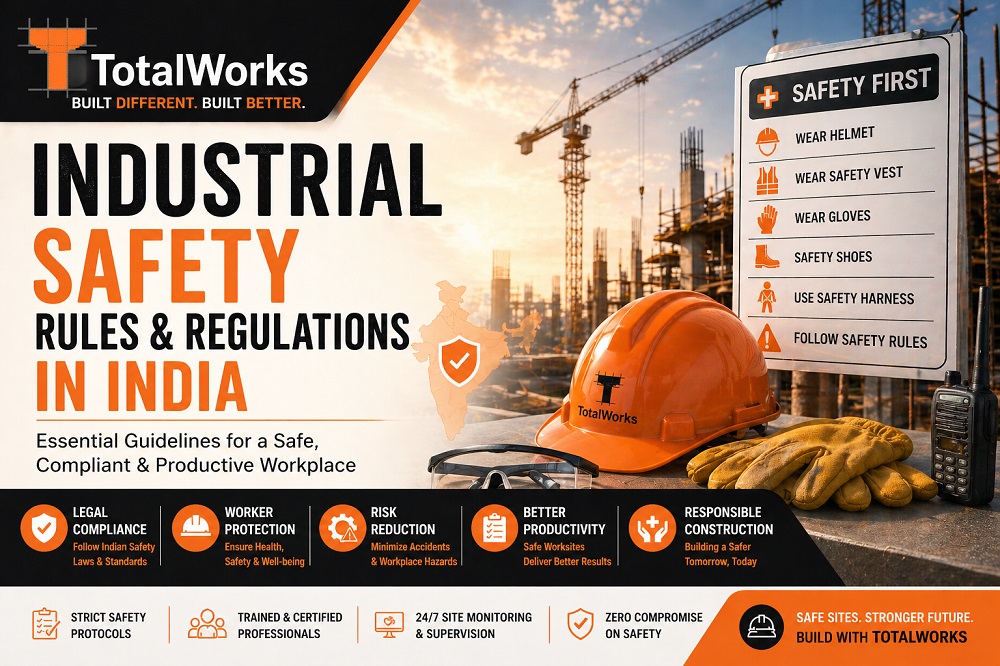
Industrial safety is a critical component of construction, manufacturing, and infrastructure development in India. Strict adherence to safety regulations ensures worker protection, minimizes risks, and improves project efficiency. Whether working with a construction company in Jaipur or hiring home construction contractors near me, understanding industrial safety laws is essential for compliance and long-term sustainability.
What is Industrial Safety?
Industrial safety refers to the set of policies, procedures, and regulations designed to ensure safe working conditions in industries such as construction, manufacturing, and engineering.
Key objectives include:
- Preventing workplace accidents
- Ensuring employee health and safety
- Reducing operational risks
- Maintaining legal compliance
A professional construction company in Rajasthan integrates safety protocols into every stage of the project.
Key Industrial Safety Laws in India
1. The Factories Act, 1948
The Factories Act, 1948 is the primary law governing industrial safety in India.
Key Provisions:
- Health and hygiene standards
- Proper ventilation and lighting
- Safe machinery operation
- Working hours regulation
This act applies to factories employing 10 or more workers with power or 20 workers without power.
2. The Building and Other Construction Workers Act, 1996
The BOCW Act, 1996 specifically addresses safety in construction activities.
Key Provisions:
- Mandatory safety equipment for workers
- Registration of construction workers
- Welfare measures and insurance
- Safety training requirements
Every building construction company in Jaipur must comply with this act to ensure worker safety.
3. The Occupational Safety, Health and Working Conditions Code, 2020
This code consolidates multiple labor laws into a unified framework.
Key Highlights:
- Standardized safety regulations
- Employer accountability
- Worker welfare provisions
- Health monitoring systems
It applies across industries, including those handled by a construction contractor near me.
4. National Building Code (NBC) of India
The National Building Code (NBC) provides guidelines for safe construction practices.
Includes:
- Structural safety standards
- Fire safety requirements
- Electrical and plumbing safety
- Emergency exits and evacuation
A reliable best construction company in Jaipur follows NBC guidelines strictly.
Essential Industrial Safety Rules
1. Use of Personal Protective Equipment (PPE)
Workers must be provided with:
- Helmets
- Safety gloves
- Protective footwear
- Safety harnesses
A professional house construction company in Jaipur ensures mandatory PPE usage on-site.
2. Proper Training and Awareness
Workers must be trained in:
- Equipment handling
- Emergency response
- Hazard identification
Training reduces accidents and improves productivity.
3. Safe Machinery Operation
- Machines must be regularly inspected
- Only trained personnel should operate equipment
- Safety guards must be installed
A structured construction company near me ensures all machinery complies with safety norms.
4. Fire Safety Measures
Mandatory fire safety practices include:
- Fire extinguishers on-site
- Emergency exits
- Fire drills
These are essential for both residential and commercial construction.
5. Working at Heights Safety
Construction sites often involve high-rise work.
Safety measures:
- Use of harnesses
- Guardrails and scaffolding
- Proper supervision
An experienced building construction company in Jaipur ensures strict compliance in such scenarios.
6. Electrical Safety
- Proper insulation of wires
- Earthing systems
- Regular inspections
Electrical hazards are one of the leading causes of accidents in construction.
Common Safety Hazards in Construction
Understanding risks helps in prevention:
- Falls from height
- Equipment-related injuries
- Electrical hazards
- Exposure to harmful materials
- Structural failures
A professional construction company in Jaipur identifies and mitigates these risks through systematic planning.
Importance of Safety Compliance
1. Legal Compliance
Failure to follow safety laws can lead to penalties, project shutdowns, or legal action.
2. Worker Protection
Ensures physical safety and reduces workplace injuries.
3. Cost Efficiency
Prevents unexpected expenses due to accidents or delays.
4. Brand Reputation
Companies known for safety standards gain higher trust.
Role of Technology in Industrial Safety
Modern construction integrates technology for safety:
- CCTV monitoring for real-time supervision
- Wearable safety devices
- Automated risk detection systems
- Digital reporting tools
A forward-thinking construction company in Rajasthan uses these tools for better safety management.
Safety Checklist for Construction Projects
Before starting a project, ensure:
- Site risk assessment completed
- Safety equipment available
- Workers trained and registered
- Emergency plans in place
- Compliance with NBC and labor laws
Working with a professional house construction company near me ensures all these steps are covered.
Challenges in Implementing Safety in India
Despite regulations, challenges remain:
- Lack of awareness among workers
- Cost-cutting by unorganized contractors
- Inconsistent enforcement of laws
- Limited training infrastructure
Choosing a structured construction contractor near me helps overcome these challenges.
Why Choosing the Right Construction Partner Matters
Safety is directly linked to the quality of execution. Unorganized contractors often ignore safety norms, leading to:
- Higher accident risks
- Poor construction quality
- Legal complications
In contrast, a professional best construction company in Jaipur ensures:
- Strict adherence to safety regulations
- Regular inspections and audits
- Skilled and trained workforce
- Transparent processes
Why TotalWorks is a Reliable Choice
TotalWorks follows a disciplined and safety-first approach in all projects:
- Defined safety protocols aligned with Indian regulations
- Regular monitoring with advanced tracking systems
- Experienced professionals managing every stage
- Structured processes ensuring zero compromise on safety
Their approach ensures compliance with all major safety laws while maintaining high construction standards.
Final Insight
Industrial safety rules and regulations in India are designed to protect workers, ensure quality construction, and maintain legal compliance. Laws such as the Factories Act, BOCW Act, and NBC provide a strong framework, but implementation depends on the construction partner.
Working with a professional construction company in Jaipur, experienced home construction contractors near me, and safety-focused teams like TotalWorks ensures not only compliance but also long-term project success.